Five Signs You Are Still Gripping Something You Decided to Let Go Of
Deciding to let go and actually letting go are two separate events.
Read more →You decided to let it go, and yet it is still in your hand, and still taking your attention.
Deciding to let go and actually letting go are two separate events. The decision happens once, in a calm moment. The grip happens many times a day, usually without announcement, and often looks like being responsible, prepared or committed.
Gripping has many disguises. It can be squeezing a goal until it stops being enjoyable, feeding a worry with one more thought, or chasing an outcome that is no longer yours to change. The tightening feels the same whatever it is aimed at, which is why it is hard to notice from the inside.
You do not have to stop caring in order to loosen. The first step is only to catch the grip while it is happening, name what you are holding, and choose one small way to ease it. Catching it is the practice, and it gets easier with repetition.
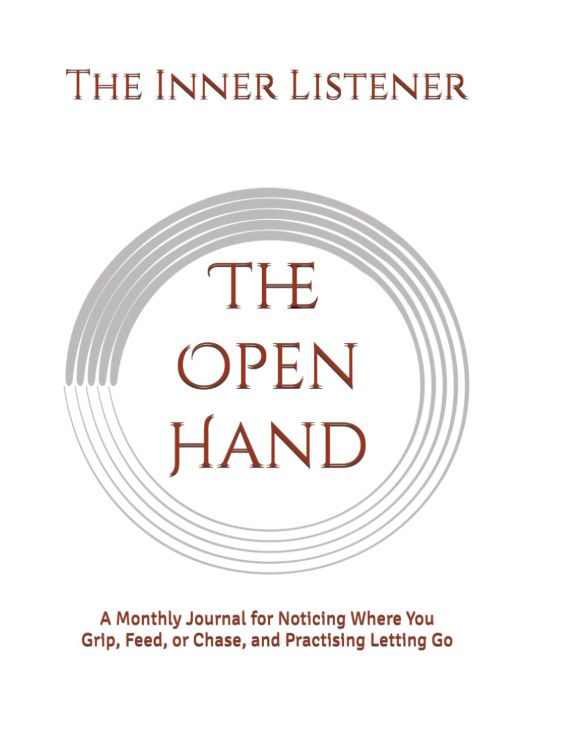
A thirty-day guided journal for noticing where you grip, feed or chase, and practising loosening it. A morning line, a midday catch and an evening rating.
On the Journals page this sits under “I cannot let go, and I cannot enjoy what I have.”
Not quite this one? Two other places to begin:
Or take the two-minute quiz → · Try the free 7-Day Reset →
Deciding to let go and actually letting go are two separate events.
Read more →A worry grows on attention.
Read more →No. Loosening your grip does not mean you stop caring or stop acting. It means holding the thing without squeezing it, so that your attention is free for the rest of your day.
Then it matters, and the journal does not ask you to pretend otherwise. It asks you to notice the tightening that adds nothing, and to ease only that part.
A few minutes in three short moments: a line in the morning, a catch at midday and a rating in the evening. It runs for thirty days.
A journal is a quiet space for reflection, not a substitute for professional medical, psychological or therapeutic advice. If anything here brings up more than you expected, please pause and speak to a qualified professional or someone you trust.