The Someday, The Cost, The Small Move
The three ideas behind The Life I Keep Postponing, now published: why the smallest possible step is the whole point, one week at a time.
Read more →Not the tax return. Not the dentist. The other kind of putting off, where the thing you keep avoiding is something you genuinely want.
Ordinary procrastination usually avoids something unpleasant. This kind is different. The postponed thing matters to you, which is exactly why it keeps getting moved to later: when you want something badly, starting it badly feels expensive.
The usual tell is the someday list. A project, a conversation, a trip, a body of work. The items that keep returning, week after week, are rarely random, and the pattern of what keeps landing on the list says more than any single item on it.
Postponing also feels reasonable from the inside. There is always a good reason: not enough time, not quite ready, wait until things settle. The reasons are real. They are also available every single day, which is the problem.
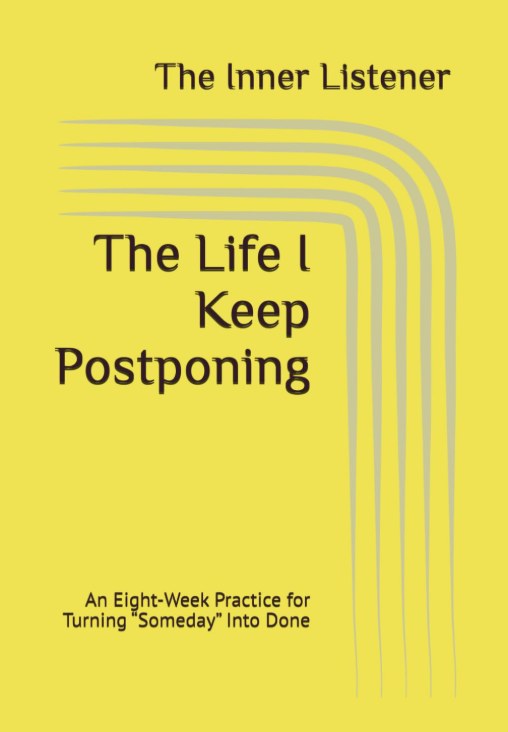
An eight-week guided journal for turning someday into done, one small task at a time.
On the Journals page this sits under “I know what I want. I am not doing it.”
Not quite this one? Two other places to begin:
Or take the two-minute quiz → · Try the free 7-Day Reset →
The three ideas behind The Life I Keep Postponing, now published: why the smallest possible step is the whole point, one week at a time.
Read more →Missing a day in a guided journal does not undo the practice.
Read more →Behind the scenes of how each guided journal gets built: one question at a time, choosing the right length, and keeping the daily page small on purpose.
Read more →Related, but not identical. Ordinary procrastination avoids a chore. This kind avoids something you want, so it tends to respond better to smaller steps and honest naming than to harder deadlines.
Missing days is expected, and it is the most common reason people drop a practice. The journal is built in separate weeks, so a missed day never affects anything beyond that week. The post I Missed a Day. Now What? goes through it.
A journal is a quiet space for noticing and for taking small steps. It is not a substitute for professional support, and a trusted person or professional is always a better place for anything heavier than a page is meant to carry.
A journal is a quiet space for reflection, not a substitute for professional medical, psychological or therapeutic advice. If anything here brings up more than you expected, please pause and speak to a qualified professional or someone you trust.