How to Notice the Small Good Moments You Almost Miss
A warm cup, a passing joke, light on the wall. How a few lines can help you keep the good moment before the next thing takes over.
Read more →You realise at ten o’clock that the best part of the day was the tea at seven, and by then it has gone.
A good moment is usually small and quiet. It does not insist on being noticed the way a problem does, so attention stays with the next task, the next message or the next worry, and the moment goes by unremarked.
Nothing is wrong with you when this happens. Attention is busy, and it tends to be pulled towards what is unfinished. Catching a good moment does not mean being cheerful or finding a silver lining. It means a few seconds of noticing, while the moment is still there.
Once you start looking, it helps to notice what the moment was made of: a sound, a sight, a person, a taste or smell, a touch, or a surprise. That makes the next one a little easier to spot.
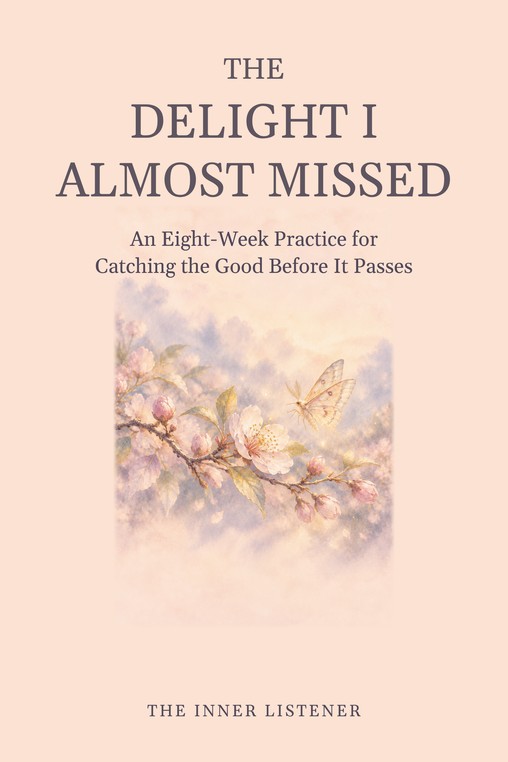
An eight-week guided journal for catching the good before it passes. Each daily page asks for the catch, what the moment was made of and what nearly made you miss it.
Publishing on Sunday 8 November. The free preview is available now.
On the Journals page this sits under “I cannot let go, and I cannot enjoy what I have.”
Not quite this one? Two other places to begin:
Or find my journal with the two-minute quiz → · Try the free 7-Day Reset →
A warm cup, a passing joke, light on the wall. How a few lines can help you keep the good moment before the next thing takes over.
Read more →A first look at The Abundance I Overlook, now available on Amazon: the three ideas it is built on, and why noticing what is already here is harder than it sounds.
Read more →No. The journal asks for one small moment a day, and it can be an ordinary one. One of its example pages says a short, ordinary entry is a full entry.
Not in the sense of a list of things to be thankful for. The page asks what the moment was made of and what nearly made you miss it, so it is about noticing rather than counting.
Some days are like that. A small moment can still be there, such as a warm cup or a quiet minute. If nothing comes, you can leave the line blank and begin again the next day.
A journal is a quiet space for reflection, not a substitute for professional medical, psychological or therapeutic advice. If anything here brings up more than you expected, please pause and speak to a qualified professional or someone you trust.