20 Journal Prompts for Saying Yes on Purpose
Most days fill up with yeses nobody remembers giving. A message answered the moment it arrived. A favour that was easier to agree to than to refuse. A commitment inherited so long ago that nobody recalls the question.
Each one is small. Together they decide what a week is made of, and at the end of it you can feel tired from things you do not remember choosing.
Why we say yes before we have decided
Agreeing is quick and kind-looking. Refusing takes a sentence, a reason and a moment of discomfort, so the automatic yes often wins, particularly with people we like or work with. Over time it becomes a reflex, and the reflex answers on our behalf.
None of this means saying no more. A good yes is just as valuable as a good no. The difference is that you chose it. The gap between the ask and the answer, even a few seconds, is where that choice lives, and writing is a gentle way to practise using it.
20 journal prompts for answering on purpose
Pick one prompt and write for five minutes. You do not need to decide anything. You are only noticing what is asking, and what it would cost. You can use initials or “someone from work” instead of names, since the page is private.
- What is asking for my time or energy today, big or small?
- Which yes did I give this week without really deciding?
- What did I agree to this month that I would not agree to again?
- Whose request do I find hardest to answer, and why?
- What would saying yes to this quietly make harder?
- What do I protect most in a normal week, and what has been eating into it?
- Which commitment did I inherit, and do I still want it?
- What do I say yes to because explaining a no feels like too much?
- Where do I feel a small flicker of resentment after agreeing?
- What expectation am I carrying that nobody has actually asked of me?
- What would a partial yes look like, for something I am unsure about?
- What is one thing I could say “not yet” to this week?
- What do I say yes to for the sake of being seen as helpful?
- What did I say no to recently that I am glad about, and how did it go?
- Which of my habits or routines did I never actually choose?
- What does my attention say yes to all day, without asking me?
- What is the future asking me to commit to, and am I ready to answer?
- If I had a few seconds between every ask and my answer, what would I do with them?
- What would I like to be known for saying yes to?
- Finish the sentence: my honest answer, and how I can say it, is…
A small exercise for today
Write down one thing that is asking for your time or energy. Under it, write the honest cost of saying yes: the quiet morning, the evening, the energy you were saving. Then finish the sentence: “My honest answer, and how I can say it, is…” The answer might be yes. It might be no, or yes to part of it, or not yet. Any of them is fine, as long as you chose it.
Saying no to one thing is never a verdict on a whole relationship, and nothing here needs to be dramatic. Start with something small.
This is the idea behind What Deserves My Yes: eight weeks of short daily entries, each looking at a different place asks tend to gather. It is a reflection tool, not a promise of results, and the pace is yours.
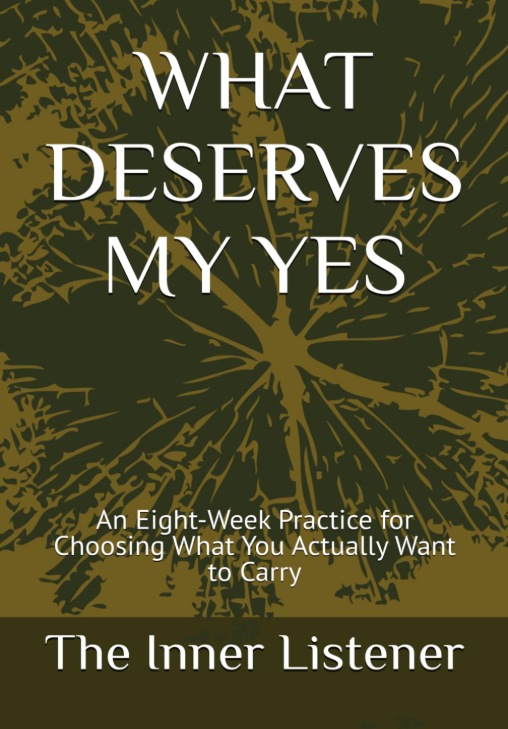
What Deserves My Yes
An eight-week guided journal for noticing what is asking for your time and energy, and answering on purpose rather than by default.
Get new prompts and posts by email
No schedule, no spam — just an email whenever a new post goes up.