20 Journal Prompts for Understanding Your Judgments
A verdict forms before you have finished noticing it. Someone is late, loud, slow, or doing something differently from how you would, and the judgment arrives fully formed.
Most judgments say more about what we are protecting than about the other person. That is worth knowing, and it is not a reason for guilt. It is a way in.
Why we judge faster than we understand
A judgment is a shortcut. It saves the effort of curiosity. Underneath it there is often a fear, an unmet need, a value, or a belief absorbed long ago and never questioned since.
You do not have to stop judging. Catching a verdict a little sooner, and asking what it is protecting, is enough to loosen it.
20 journal prompts for understanding your judgments
Pick one prompt and write for five minutes. Be honest about the verdict rather than polite, since the page is private. If a prompt does not fit, take another.
- What judgment did I notice about someone today, in the exact words?
- What did the person actually do, described without the verdict?
- What fear might the judgment be protecting?
- What need of mine might be going unmet?
- What value of mine does it seem to defend?
- What belief about how people should behave did I absorb, and from whom?
- Where did I learn that this behaviour is wrong?
- What would be a kinder, plainer way to say the same thing?
- Whom do I judge most often, and what do they have in common?
- What do I judge in other people that I am hard on myself about?
- What judgment do I reserve for myself, and whose voice does it speak in?
- What would I say to a friend who spoke to themselves that way?
- What might I not know about this person’s day?
- When was I judged and later realised the full story was different?
- What judgment do I only voice silently, and what would change if I said it kindly?
- What do I envy that I have turned into criticism?
- What judgment have I carried for years without questioning?
- What would curiosity ask here, in place of a verdict?
- What do I notice when I catch a judgment sooner?
- What judgment am I ready to put down?
A small exercise for today
Notice one judgment today. Write it down as it came, then ask which root feels closest: a fear, an unmet need, a value or a belief. Finally, rewrite the same moment as one plain, kinder sentence, without the verdict attached. For example, “She is always late. It is disrespectful” might become “When people are late, I feel that my time does not matter.”
This is about understanding, not about excusing anyone. Boundaries still matter.
This is the idea behind The Things I Judge: eight weeks of tracing one judgment a day to its root and rewriting it as a kinder, lighter sentence. It is a reflection tool, not a promise of results, and the pace is yours.
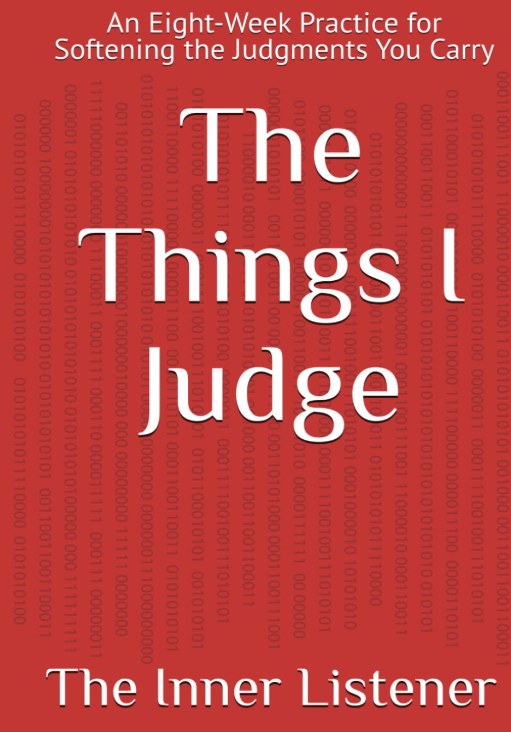
The Things I Judge
An eight-week guided journal for tracing a judgment back to the fear, need, value or belief underneath it, and rewriting the moment in one kinder sentence.
More like this
The Judgment, The Root, The Release →
Start here: Why do I judge people faster than I understand them? →
Get new prompts and posts by email
No schedule, no spam — just an email whenever a new post goes up.