The Judgment, The Root, The Release
A first look at The Things I Judge, a new journal taking shape: the three ideas it is built on, and why a judgment is rarely about the person it lands on.
Read more →The verdict arrives in a second. Understanding, if it comes at all, takes much longer.
A judgment is quick because it is doing a job. It is rarely about the person it lands on. More often it is protecting something of your own: a fear, a need, a value or a belief.
Tracing a judgment back to what it protects does not mean the judgment was wrong, or that you should approve of what you judged. It means you can see what the verdict was for.
The same applies inwards. Many people reserve their sharpest judgments for themselves, and those follow the same shape: a fast verdict, protecting something, rarely examined.
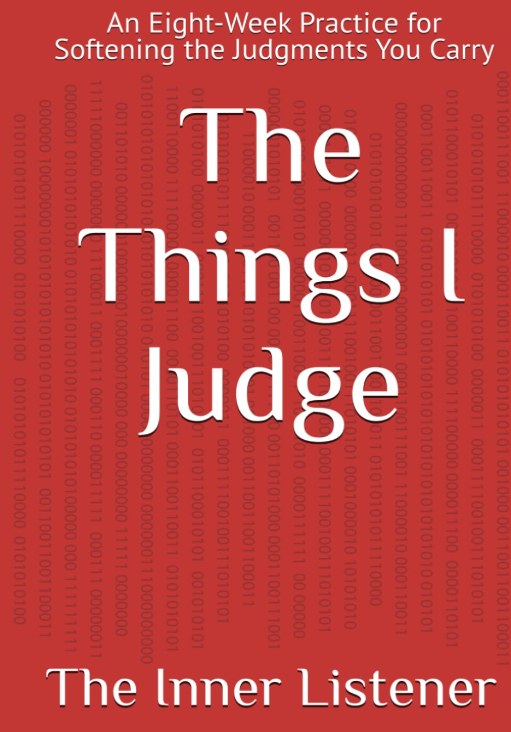
An eight-week guided journal for tracing a judgment back to what it is actually protecting.
On the Journals page this sits under “I am harder on people, and on myself, than I want to be.”
Not quite this one? Two other places to begin:
Or take the two-minute quiz → · Try the free 7-Day Reset →
A first look at The Things I Judge, a new journal taking shape: the three ideas it is built on, and why a judgment is rarely about the person it lands on.
Read more →No. Judgment is a normal part of thinking. The practice is about seeing what a judgment is protecting, so that it informs you rather than steering you.
You never need to use names. A nickname, a role or a general shape is enough.
No. It is a reflective practice. If something heavier comes up, a qualified professional or someone you trust is a better place for it.
A journal is a quiet space for reflection, not a substitute for professional medical, psychological or therapeutic advice. If anything here brings up more than you expected, please pause and speak to a qualified professional or someone you trust.