How to Write a Short Story From Your Own Life Without a Punchline
The Stories I Want to Remember is available on Amazon in paperback and hardcover. See the journal page for the free preview and buy links.
Many people stop before they start because they think a story needs a punchline. It does not. A story from your own life only needs a scene and a reason you wanted to keep it.
If you have ever said “it is hard to explain, but you had to be there”, you already have material. Here are six ways to begin.
1. Start with an object
Pick something you own or once owned, and write down what it was doing in the story. A kettle, a coat, a wrong key. Objects are good at being funny without trying.
2. Start with the exact words
Write down what was said, as closely as you remember it. Dialogue gives a story a pulse straight away, and the words are often the funniest part.
3. Start with the moment the plan changed
Most small stories have a hinge: the point at which the plan stopped being the plan. Name it. “The five-minute job became a different sort of job when I opened the cupboard.”
4. Start with where you looked
Stories about something lost or mixed up often turn on where you looked first, and where the thing was all along. That single contrast can hold the whole story.
5. Start with what you would call it
Give the story a name, as if it were a film or an official report. Titles help you decide what the story is really about, and they make it easy to find again.
6. Start with who was there
Write the names of the people involved and one thing each of them did. You are keeping the people as well as the event.
What if it does not end well, or at all
Leave it. Not every story resolves. Some end with a shrug, some with “and that was that”. A story without an ending is still a story you were glad to have kept.
An example
This example was written for this article. It is an illustration, not a real entry.
Title: The Kettle Incident.
“I was certain the kettle was broken. I boiled it three times. It was only when my sister came round that she pointed out I had been plugging it into the extension lead that had been switched off since March.”
That is a complete story. It has an object, a mistake and a person to tell it to.
Inside The Stories I Want to Remember
The Stories I Want to Remember has 42 story invitations across six chapters, so you never have to begin with a blank page. The chapters cover everyday plot twists, being confidently wrong, peculiar little ways, little adventures, food and objects, and scenes worth keeping. Each story has two pages, with an optional detail question on the facing page.
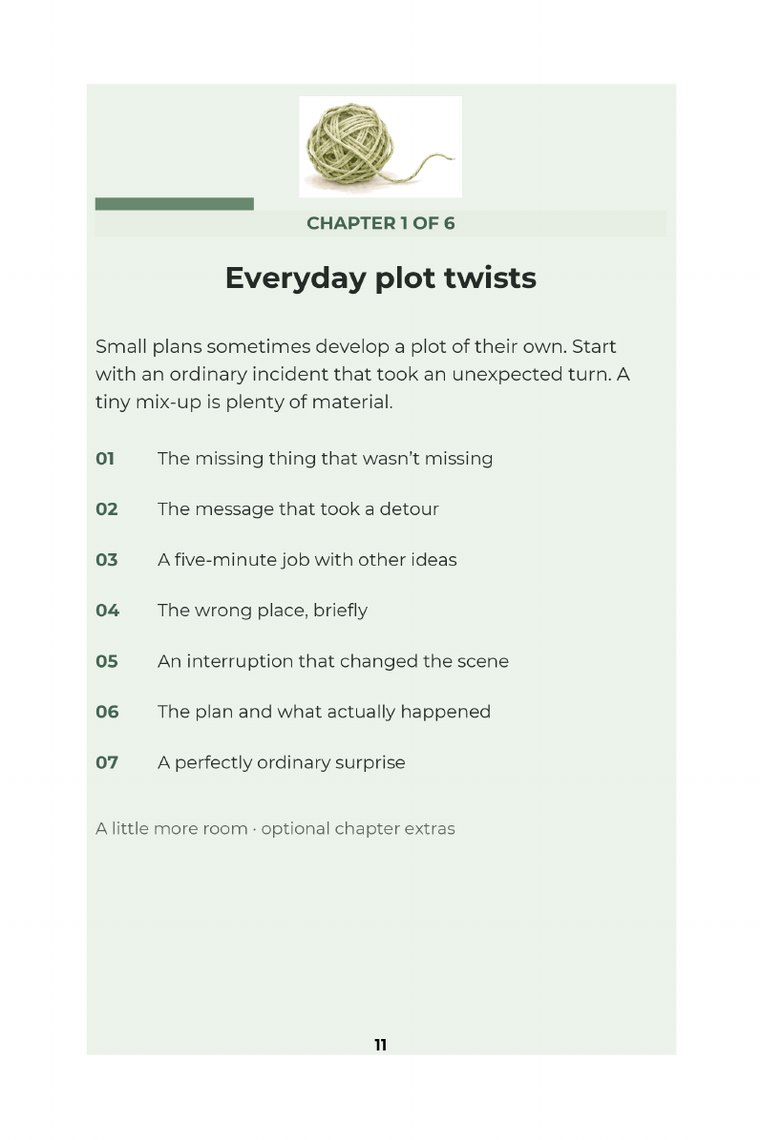
See the journal and read the free preview, or go straight to the paperback on Amazon.com.
To begin right now, with any story that has come to mind:
What would you like to call this one?
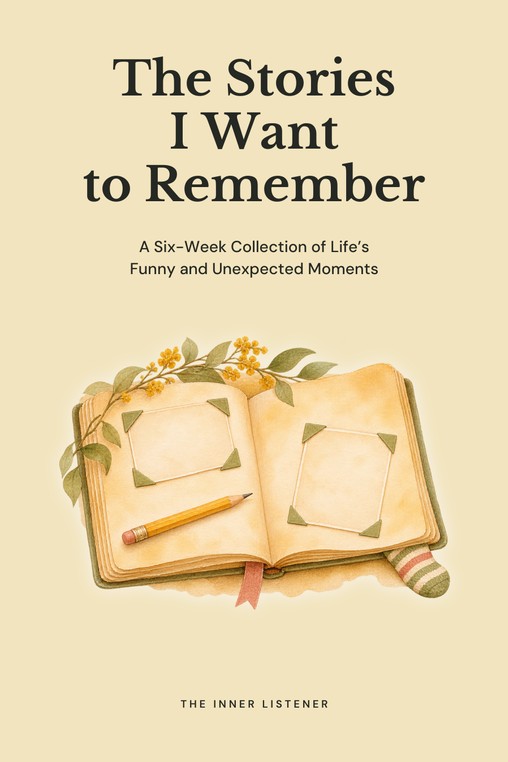
The Stories I Want to Remember
A six-week collection of 42 story invitations for keeping life’s funny, unexpected and ordinary moments in your own words.
More like this
How to Keep the Funny, Unexpected Stories From Your Life →
20 Journal Prompts for Keeping the Funny, Unexpected Stories of Your Life →
Get new posts by email
No schedule, no spam — just an email whenever a new post goes up.