The Swallow, The Show, The Release
A preview of The Things I Don't Say, now live in India via Pothi: the three ideas it is built on, and why three honest lines a day is the whole practice.
Read more →You explain, you soften, you change the subject, and the one direct sentence stays where it is.
Swallowing a sentence is rarely cowardice. It is usually a quick calculation: the cost of saying it feels bigger than the cost of holding it, and holding it feels free. It is not free. It is simply paid in small instalments.
Over-explaining is often the sign. Long justifications can stand in for the one sentence that was avoided, because explaining feels like communicating without the risk of saying the thing itself.
Hearing the sentence privately comes first. Saying it to anyone is a later and separate decision. Writing it plainly, three lines at a time, shows you what you have been carrying, and whether it is worth holding or ready to let go.
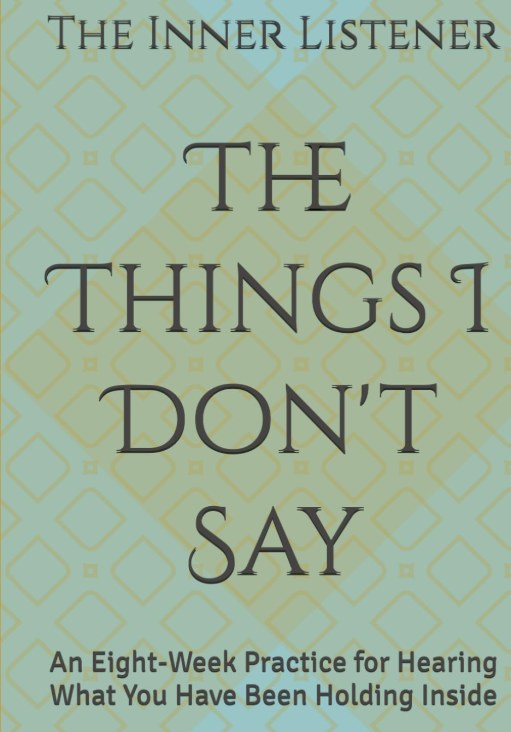
An eight-week guided journal for hearing what you have been holding inside, three lines at a time.
On the Journals page this sits under “I say yes when I mean no, and I swallow what I mean to say.”
Not quite this one? Two other places to begin:
Or take the two-minute quiz → · Try the free 7-Day Reset →
A preview of The Things I Don't Say, now live in India via Pothi: the three ideas it is built on, and why three honest lines a day is the whole practice.
Read more →A first look at Everything I Noticed And Never Said, a new 45-day journal kept in secret about someone you love: the three moves it is built on, and why noticing beats…
Read more →No. The journal is a private practice, and nothing you write needs to be shared. It simply helps you see clearly what you have been holding, so any decision is made with your eyes open.
You never need to. A general shape, a nickname or “someone at work” holds just as much truth as the specifics.
Pause, and speak to a qualified professional or someone you trust. A journal is a quiet space for noticing, not a place for anything heavier than a page is meant to carry.
A journal is a quiet space for reflection, not a substitute for professional medical, psychological or therapeutic advice. If anything here brings up more than you expected, please pause and speak to a qualified professional or someone you trust.